“Jesus wept” (John 11:35, NKJV) is the shortest verse in most English Bibles, and one of the most surprising.
Jesus knew how the story of Lazarus would end. When news of his illness first reached Him, He said:
“This sickness is not unto death, but for the glory of God, that the Son of God may be glorified through it.” (John 11:4, NKJV)
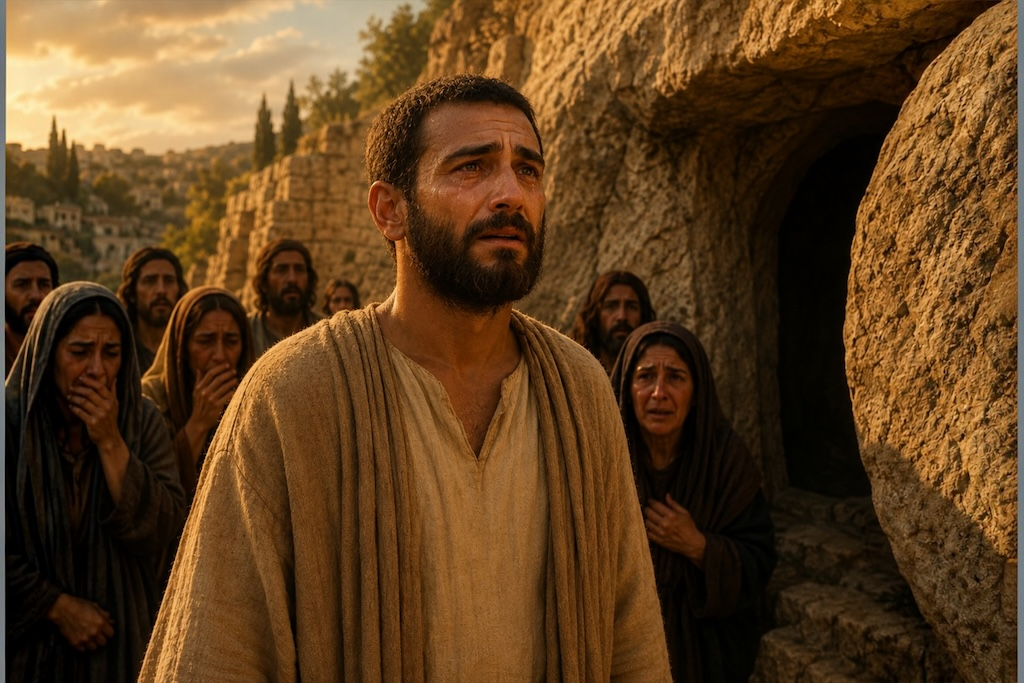
When He arrived in Bethany, He told Martha, “Your brother will rise again” (John 11:23, NKJV). He was not uncertain or caught off guard, and within the hour He would call Lazarus out of the tomb. Still He wept.
Troubled at the Grave
John tells us that when Jesus saw Mary and her friends weeping, “He groaned in the spirit and was troubled” (John 11:33, NKJV). The Greek word behind “groaned” suggests strong, even indignant emotion rather than gentle sentiment. This was grief at death itself and at what it had done to a family He loved, even as He stood ready to undo it.
That corrects something we often get wrong. Being sure of the outcome does not make present sorrow illegitimate. Jesus knew the ending and still entered fully into Mary and Martha’s loss.
Ash That Becomes Good Soil
Farmers who live near volcanoes know a similar tension. An eruption can bury fields and destroy homes, and the grief is real. Over the years, though, the ash breaks down into some of the most fertile soil in the world. Knowing that does not stop people from mourning what the mountain has taken.
The Resurrection and the Life
Before He went to the tomb, Jesus made one of His clearest statements about death:
“Jesus said to her, ‘I am the resurrection and the life. He who believes in Me, though he may die, he shall live. And whoever lives and believes in Me shall never die.'” (John 11:25-26, NKJV)
This is the hope Scripture holds out for every believer who dies: death as a sleep, with the dead in Christ rising when He returns (1 Thessalonians 4:16). Lazarus himself would die again. His raising was a sign pointing to the greater resurrection still to come, when every grave gives up its dead. Jesus knew all of this, and He still wept. The larger hope did not cancel the grief; it stood beside it.
A Pastor at His Wife’s Bedside
Picture a pastor who has spent more than twenty years walking families through the final days of people they love, always confident in the resurrection hope he preaches. Some are surprised to see him weep at a bedside. Then his own wife falls seriously ill. He weeps beside her during her illness and again when she dies, and for months afterwards his daughter sometimes finds him alone in his room, sobbing.
When someone gently asks whether his tears mean his faith has wavered, he answers, “I’m not crying because I don’t believe what comes next. I’m crying because this, right here, still hurts, and it’s supposed to. Believing the ending is good doesn’t mean pretending this chapter isn’t sad.”
Grieving With Hope
None of this means we should manufacture grief we do not feel, or mourn as people without hope. Paul warns against that kind of sorrow (1 Thessalonians 4:13). Hope and grief were never meant to cancel each other out.
If you are standing at a grave of your own, or beside someone who is, you do not have to hurry past the tears to prove your faith. Jesus did not. Let the grief be real, and hold on to the hope that He will one day call His people from their graves.