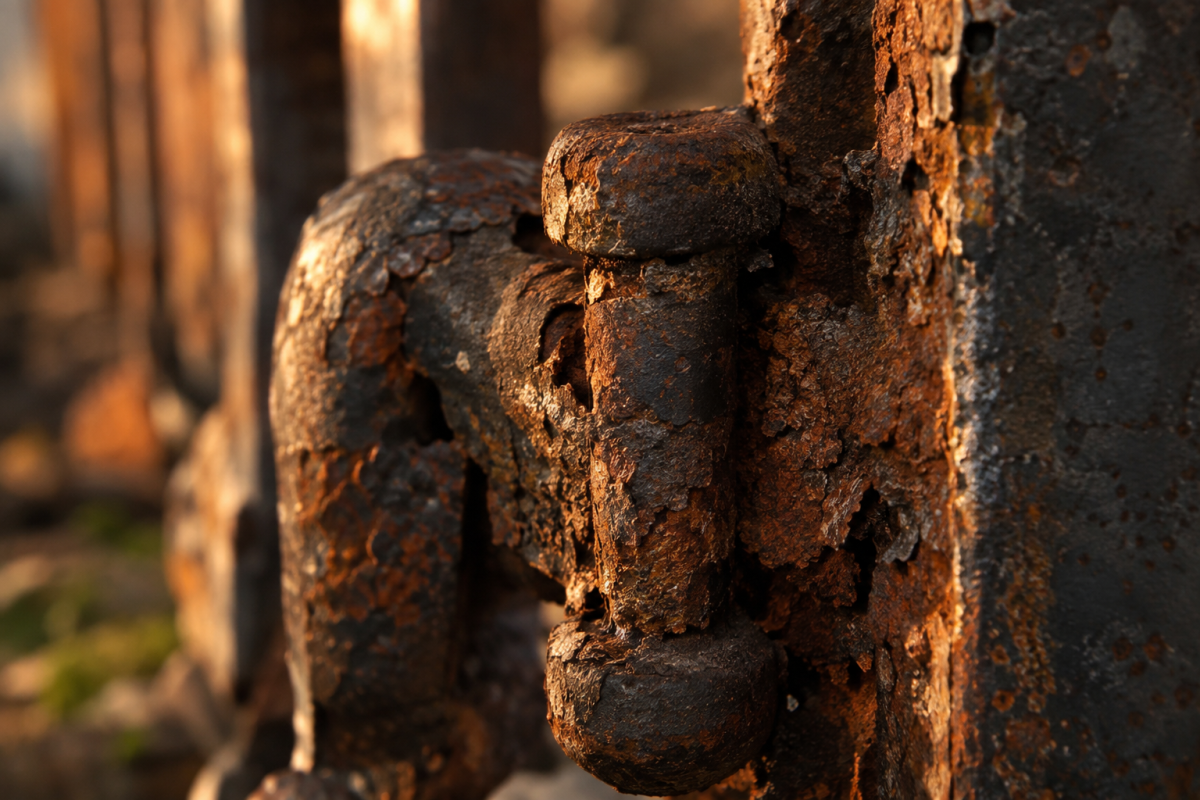
Rust never announces itself with an explosion. It doesn’t need to. Left alone on an iron gate, a bicycle chain, a corrugated roof, it works in complete silence — a faint discoloration nobody bothers to scrape off, then a rougher patch, then a hole where solid metal used to be. By the time anyone treats it as a real problem, it’s usually because something has already given way: a hinge that snaps, a roof that leaks, a chain that finally breaks mid-ride.
Nobody ever died from a single spot of rust. Plenty of structures have collapsed from years of nobody taking it seriously.
Grumbling works exactly like that in the life of a believer, and Scripture treats it with a seriousness that should genuinely surprise us.
A Sin Most of Us Have Stopped Calling Sin
We’ve quietly reclassified grumbling as personality rather than sin — “she’s just a complainer,” “that’s just how he processes things,” said with an indulgent shrug rather than any real concern. Scripture doesn’t share that shrug. When Israel grumbled in the wilderness over food and water, God’s response wasn’t mild:
“And in the morning you shall see the glory of the LORD; for He hears your complaints against the LORD. But what are we, that you complain against us?… Your complaints are not against us but against the LORD.” — Exodus 16:7-8, NKJV
Moses is explicit here: the grumbling wasn’t really aimed at him, however it sounded on the surface. It landed, ultimately, on God Himself. That reframing alone should stop us. Every complaint about our circumstances is never purely about the circumstances. It’s a quiet verdict rendered on the character of the One who allowed them.
The Generation That Grumbled Its Way Out of the Promise
The clearest, most sobering account comes after the twelve spies returned from Canaan. Ten brought back a discouraging report, and the people’s response was immediate:
“And all the congregation lifted up their voices and cried, and the people wept that night. And all the children of Israel complained against Moses and Aaron, and the whole congregation said to them, ‘If only we had died in the land of Egypt! Or if only we had died in this wilderness!’” — Numbers 14:1-2, NKJV
God’s response to this particular round of grumbling is the part most of us skip over:
“How long shall I bear with this evil congregation who complain against Me? I have heard the complaints which the children of Israel make against Me… The carcasses of you who have complained against Me shall fall in this wilderness.” — Numbers 14:27, 29, NKJV
Not the spies’ bad report. Not even the initial fear. The complaining itself is named as the specific offense that sealed an entire generation’s fate — barring them from the very promise they’d been walking toward for two years. Paul later draws the direct application for believers reading his letter centuries afterward:
“Nor complain, as some of them also complained, and were destroyed by the destroyer.” — 1 Corinthians 10:10, NKJV
Paul doesn’t file this under harmless venting. He files it under the same category as idolatry and sexual immorality in the surrounding verses (1 Corinthians 10:6-10) — sins the wilderness generation committed that Paul explicitly warns the church against repeating.
Why It’s So Easy to Miss
Part of what makes grumbling so dangerous is precisely how ordinary it feels. Nobody grumbling in the wilderness thought of themselves as committing a serious sin. They thought of themselves as being honest about real hardship — genuinely thirsty, genuinely tired, genuinely afraid. And their hardships were real. God never disputes that the wilderness was hard. What He disputes is the conclusion drawn from it: that His character, His provision, His goodness were therefore in question. That’s the rust nobody notices — not the hardship itself, but the quiet erosion of trust that hardship, left unexamined, produces one complaint at a time.
Paul’s instruction to the Philippian church names the alternative plainly:
“Do all things without complaining and disputing, that you may become blameless and harmless, children of God without fault in the midst of a crooked and perverse generation, among whom you shine as lights in the world.” — Philippians 2:14-15, NKJV
Do all things. Not merely refrain from complaining about the big things. The instruction covers the small, daily friction too — because that’s precisely where rust actually starts.
A Story Worth Sitting With
I know a woman who ran a small tailoring business for years, skilled and reliable, but known among her own apprentices for a running commentary of complaint that rarely stopped — about customers, about fabric suppliers, about the government, about the weather, about nearly everything that crossed her path in a day. None of it was dramatic. None of it looked, on its own, like rebellion against God. One afternoon, complaining yet again to a close friend — this time about how ungrateful and lazy her apprentices had become, how one after another had left within a few months, how even the ones who stayed long enough to finish their training refused to remain on afterward as a “join-man,” working alongside her the way graduated apprentices traditionally do — her friend finally said something she hadn’t expected. Her friend ran a similar business two streets away, and nearly every apprentice she’d ever trained had stayed on as a join-man, several for years. “Have you noticed,” her friend asked gently, “that it’s not the apprentices who keep changing? Customers too. It’s the same complaints, every time, no matter who walks through your door.” It wasn’t said cruelly, but it landed hard. She went home that night and, for the first time, actually counted how many times a day she complained out loud — and was startled by the number. She has said since that she never once thought of her complaining as sin. She’d simply thought of it as being honest.
There’s a proverb worth carrying into this: a small leak will sink a great ship. Not the storm. The leak nobody bothered to patch.
What This Isn’t Saying
This isn’t a call to deny real pain or pretend hardship doesn’t exist — Scripture makes ample room for honest lament, and there’s an important difference between lament and grumbling. The Psalms are full of raw, honest cries brought directly to God (Psalm 13, Psalm 42). Grumbling, by contrast, is typically spoken about God, to everyone except Him — a complaint aimed sideways at other people, rehearsed and repeated, rather than an honest wrestling brought upward in prayer. The wilderness generation had God standing in a pillar of cloud right in front of them and still chose to grumble to each other about Him rather than cry out honestly to Him. That posture, not the pain itself, was the actual offense.
Five Questions Worth Sitting With
- When hardship comes, is my honest instinct to complain about God to others, or to bring my complaint honestly to Him?
- What “small leak” of ongoing grumbling have I stopped noticing simply because it’s become familiar?
- Have I mistaken habitual complaint for honesty, the way the woman in the story once did?
- Who around me might be quietly exhausted by an atmosphere I’ve created without realising it?
- What promise might I be walking toward right now that a grumbling heart could cause me to forfeit?
A Final Word
Rust never asks permission before it starts, and it never announces the moment a structure finally becomes unsafe. It simply works, quietly, for as long as it’s left alone. An entire generation stood at the very edge of a promise God had sworn to keep, and grumbled their way out of ever entering it — not through one dramatic rebellion, but through a habit of complaint they never took seriously enough to treat as sin. The Kingdom of God being prepared for those who endure isn’t entered by people who never faced hardship. It’s entered by those who learned, one small moment at a time, to bring the hardship honestly to God rather than let it quietly rust away their trust in Him.