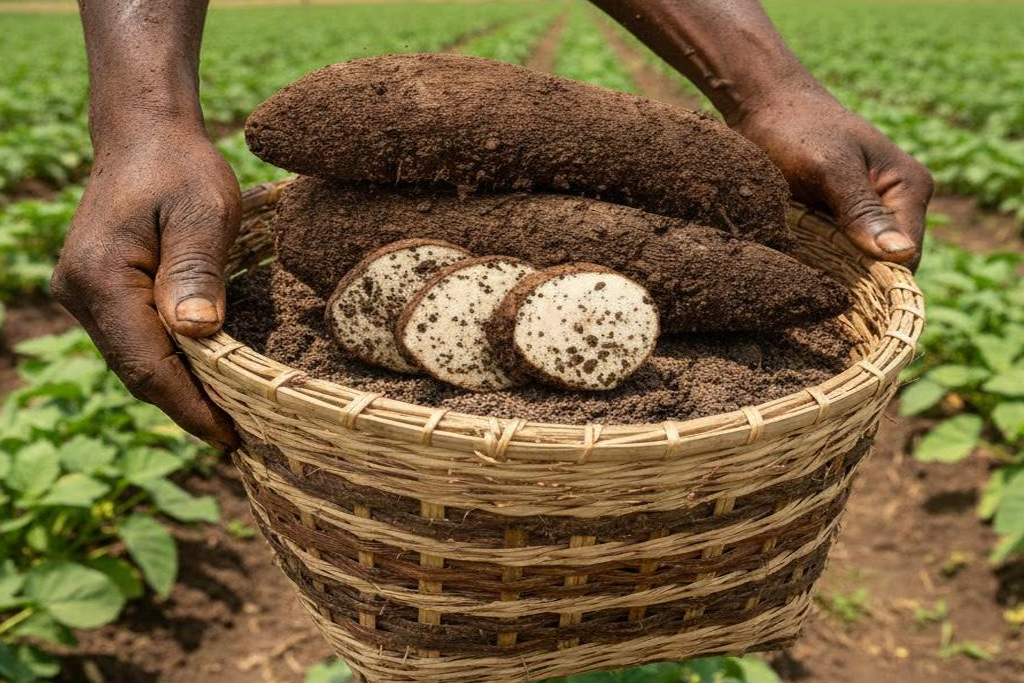
At harvest time, every yam farmer faces a quiet decision nobody outside the farm ever thinks about. Spread out before him are dozens of perfectly good yams — healthy, edible, fit for the pot tonight. But from that same pile, he sets aside a smaller, more carefully chosen selection: the seed yams. Not simply the biggest ones, or the ones that look most impressive.
The ones without blemish, properly matured, disease-free, shaped correctly for cutting into viable seed pieces. Every single yam in that pile was “good.” Only a few were fit to become next season’s harvest.
Here’s the part that makes this decision matter so much: if the farmer gets lazy and just grabs whatever’s convenient for seed, nobody notices the mistake immediately. The yam still looks fine going into the ground. It’s only months later, at the next harvest, that the cost of choosing merely “good” instead of “best” becomes obvious — in a smaller yield, weaker plants, a season quietly diminished by a decision made carelessly at the start.
That’s precisely the discernment Paul was praying his readers would grow into.
A Prayer for More Than Just Good Judgment
Paul’s prayer for the believers at Philippi is worth reading slowly:
“And this I pray, that your love may abound still more and more in knowledge and all discernment, that you may approve the things that are excellent, that you may be sincere and without offense till the day of Christ.” — Philippians 1:9-10, NKJV
The Greek word behind “excellent” there — diapheronta — literally means “the things that differ.” Paul isn’t praying that believers would simply learn to tell good from evil. Most mature Christians can already manage that distinction reasonably well. He’s praying for something harder: the ability to hold two genuinely good options side by side and discern which one is actually better — which one, of several decent choices, is the one that truly fits the moment, the calling, the will of God.
That is a far more demanding skill than avoiding obvious sin. Sin is usually easy to spot once you’re looking honestly. Two good things standing next to each other, quietly competing for your yes, is a much harder crossroads to navigate well.
Mary, Martha, and the Better Part
Christ Himself drew this exact line for two sisters who both loved Him, in a story most of us have heard so often we’ve stopped noticing how sharp it actually is:
“But Martha was distracted with much serving, and she came to Him and said, ‘Lord, do You not care that my sister has left me to serve alone? Therefore tell her to help me.’ And Jesus answered and said to her, ‘Martha, Martha, you are worried and troubled about many things. But one thing is needed, and Mary has chosen that good part, which will not be taken away from her.’” — Luke 10:40-42, NKJV
Notice — Jesus never called Martha’s serving bad. Hospitality, hard work, caring for guests: these are all genuinely good things, commended elsewhere in Scripture. Martha wasn’t sinning in the kitchen. She was simply choosing good over best, at the one moment best was actually available and wouldn’t stay available forever. Mary discerned that this particular visit, on this particular day, called for something the kitchen couldn’t offer: sitting still long enough to actually listen.
David’s Good Idea That Wasn’t the Right One
There’s an even more striking Old Testament example, because it involves a genuinely godly man with a genuinely godly desire. David, settled at last in his palace, looked around and felt uncomfortable that the ark of God still dwelt in a tent while he lived in comfort. He told the prophet Nathan he wanted to build God a permanent house. Nathan, on his own initiative, told him to go for it (2 Samuel 7:2-3). It sounded, to everyone in the room, like an unmistakably good idea.
That same night, God corrected the plan — not because David’s heart was wrong, but because the timing and the man were wrong for this particular assignment:
“You shall not build Me a house to dwell in… Also the LORD tells you that He will make you a house.” — 1 Chronicles 17:4, 10, NKJV
The temple would still be built — just not by David, and not yet. David’s desire was good. It simply wasn’t the best plan for that season, and David, to his credit, had the discernment to receive the correction without resentment rather than pushing his good idea through anyway.
A Story Worth Sitting With
Early in my years as a pharmaceutical sales manager, I was offered two postings in the same season — one a comfortable, well-established territory close to family, the other a demanding, unglamorous region that badly needed rebuilding. Both were genuinely good opportunities. Either one would have looked perfectly reasonable on paper, and no one would have faulted me for choosing comfort. What eventually tipped the decision wasn’t which option was easier, but which one actually stretched the gifts I’d been given and served people who needed the work done more urgently. It wasn’t a choice between right and wrong. It was a choice between good and best, and it shaped years of my career and character in ways the comfortable option likely never would have.
Five Questions Worth Sitting With
- Is there a decision in front of me right now where I’m choosing “good” simply because it’s easier to justify than sitting still long enough to discern “best”?
- Have I, like Martha, let good, busy activity crowd out the one thing actually needed in this season?
- Am I, like David, holding tightly to a good idea I need to release for God’s better timing?
- Do I regularly ask God for discernment, or only for permission to do what I’ve already decided?
- Looking back at last year, can I identify a moment I settled for “good” and quietly wonder now what “best” might have cost, or given, instead?
Final Word
Every yam in the farmer’s pile was perfectly good. Only the discerning few, set aside with real care, became next season’s harvest. Paul’s prayer for us was never that we’d merely learn to avoid the rotten and the obviously spoiled — most of us manage that much on instinct. It was that our love would grow sharp enough, patient enough, and humble enough to tell two good things apart, and choose the one that actually matters for the day still coming — the day the Kingdom of God, prepared for those who discerned rightly and walked accordingly, is finally, fully here.